

Introduction
Hair thinning is a common concern that can affect both men and women at different stages of life. While losing some hair every day is a normal part of the hair growth cycle, noticeable thinning, excessive shedding, a widening hair part, or a receding hairline may indicate an underlying problem.
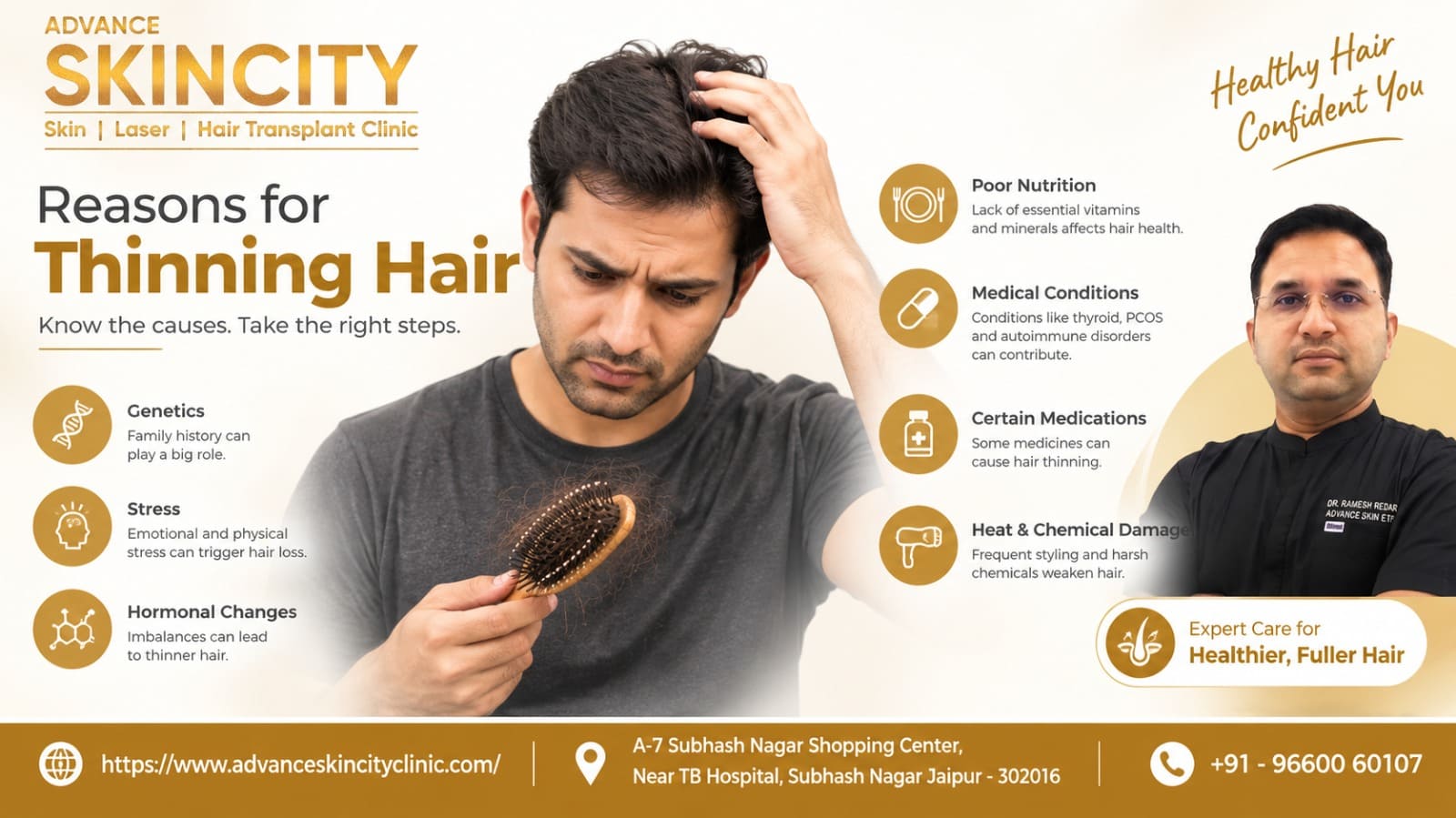
There are several reasons for thinning hair, and the cause can vary from person to person. Genetics, hormonal changes, nutritional deficiencies, stress, medical conditions, medications, aging, lifestyle habits, and hair-care practices can all influence hair growth.
Understanding the reasons for thinning hair is important because treating hair fall without identifying its cause may not provide the expected results. This article explores the common causes of hair thinning in men and women and provides practical tips for maintaining healthier hair.
What is Hair Thinning?
Hair thinning refers to a reduction in the density or thickness of hair on the scalp. It may happen gradually over time or develop more noticeably after a specific trigger such as illness, stress, hormonal changes, or nutritional deficiency.
Some common reasons for thinning hair include:
- Increased hair fall while brushing or washing
- A widening hair part
- A thinner ponytail
- Receding hairline
- More visible scalp
- Hair becoming finer or weaker
- Thinning around the crown
- Slow or reduced hair growth
It is important to understand that hair shedding and hair thinning are not always the same. Temporary excessive shedding can occur after stress or illness, while progressive thinning may be linked to genetic or hormonal factors.
Common Causes of Thinning Hair
1. Genetic Factors and Male Pattern Baldness
Genetics are among the most common reasons for thinning hair. Androgenetic alopecia, commonly known as male pattern baldness, can cause gradual hair thinning in men.
It often begins with a receding hairline, thinning at the temples, or reduced hair density around the crown. In genetically susceptible individuals, hair follicles may become progressively smaller, producing finer and shorter hair strands.
Women can also experience genetically influenced hair thinning, commonly called female pattern hair loss. In women, thinning is often more noticeable around the top of the scalp and may appear as a widening part.
2. Hormonal Imbalances
Hormones have an important role in regulating the hair growth cycle. Changes in thyroid hormones, reproductive hormones, or androgen levels may contribute to excessive shedding or thinning.
Women may experience hair changes during pregnancy, after childbirth, around menopause, or with certain hormonal conditions. In men, sensitivity to androgens can contribute to pattern hair loss.
If hormonal changes are suspected, identifying and addressing the underlying condition can be an important part of managing hair loss.
3. Nutritional Deficiencies
Hair follicles require adequate nutrients to support normal growth. Inadequate intake or deficiency of certain nutrients may contribute to increased shedding.
Low levels of nutrients such as iron, protein, zinc, vitamin D, and vitamin B12 may be associated with hair loss in some individuals. Restrictive diets, poor nutrition, or certain health conditions can increase the risk of deficiencies.
Eating a varied and balanced diet is therefore important for maintaining healthy hair. Supplements should ideally be taken when a deficiency has been identified or when recommended by a healthcare professional.
4. Stress and Telogen Effluvium
Stress is another one of the reasons for thinning hair. Significant physical or emotional stress can temporarily disrupt the normal hair-growth cycle.
Telogen effluvium is a type of temporary hair shedding in which a larger number of hairs enter the resting phase and are subsequently shed. It can occur after events such as severe illness, surgery, significant weight loss, emotional stress, or other physical strain.
Hair shedding may become noticeable weeks or months after the triggering event. Once the underlying trigger is addressed, the hair cycle may gradually return toward normal.
5. Medical Conditions
Certain medical conditions can contribute to hair thinning and excessive shedding. These may include thyroid disorders, scalp infections, autoimmune conditions, and some chronic illnesses.
Alopecia areata, for example, can cause sudden, localized patches of hair loss. Scalp inflammation and other dermatological conditions can also affect the normal hair-growth cycle.
If hair loss is sudden, severe, patchy, or accompanied by itching, redness, scaling, or pain, professional evaluation is recommended.
6. Medications and Treatments
Some medications can cause hair shedding as a potential side effect. Certain medical treatments, including some cancer therapies, can also significantly affect hair growth.
Medication-related hair loss may be temporary or may continue while the triggering medication is being used. If you notice significant hair loss after starting a medication, discuss the concern with your healthcare professional rather than stopping prescribed treatment on your own.
7. Poor Hair Care Practices
Hair-care habits can also contribute to breakage and make hair appear thinner. Frequent heat styling, chemical treatments, bleaching, straightening, and tight hairstyles may damage the hair shaft or place excessive tension on the follicles.
Regularly wearing very tight ponytails, buns, braids, or extensions can contribute to traction-related hair loss.
Using gentle techniques, avoiding excessive tension, and limiting harsh treatments can help reduce preventable hair damage.
8. Age-Related Hair Thinning
Hair naturally changes as we age. Hair follicles may produce finer strands, the growth phase may become shorter, and overall hair density may decrease.
Age-related thinning can affect both men and women. Genetic factors and hormonal changes may make these changes more noticeable over time.
9. Lifestyle Factors
Lifestyle habits can influence overall health and may also affect hair health. Poor sleep, prolonged stress, smoking, excessive alcohol consumption, highly restrictive diets, and lack of physical activity may contribute to poor overall well-being.
Maintaining healthy lifestyle habits, getting adequate sleep, eating nutritious food, and staying physically active can support general health and a healthy hair-growth environment.
10. Environmental Factors
Environmental exposure can affect the condition of the hair and scalp. Pollution, dust, excessive sun exposure, dry weather, humidity, and certain water conditions may contribute to dryness, irritation, or hair-shaft damage.
Environmental factors may not always be the main cause of significant hair loss, but protecting the hair and scalp and following an appropriate cleansing routine can help maintain hair quality.
Hair Thinning in Men
Hair thinning in men is frequently associated with androgenetic alopecia or male pattern baldness. The first signs may include a receding hairline, thinning at the temples, or reduced density around the crown.
However, genetics are not the only causes of hair thinning male patients may experience. Stress, nutritional deficiencies, medical conditions, medications, lifestyle factors, and scalp problems can also contribute.
Men experiencing rapid or unusual hair loss should consider professional assessment, particularly if the hair loss is sudden or accompanied by scalp symptoms.
Hair Thinning in Women
Hair thinning in women can have several possible causes. Female pattern hair loss may cause gradual reduction in hair density, especially around the top of the scalp, while the front hairline may remain relatively preserved.
Hormonal changes can also play an important role. Women may experience increased shedding after pregnancy, around menopause, or alongside certain hormonal conditions. Nutritional deficiencies, stress, thyroid problems, restrictive diets, and medical conditions can also contribute.
These are some of the important reasons for thinning hair in females, but the actual cause can vary significantly between individuals. A professional assessment can help identify whether the hair loss is related to genetics, hormones, nutrition, scalp health, or another factor.
How to Prevent Hair Thinning
Not every type of hair loss can be completely prevented, particularly when genetics, aging, or certain medical conditions are involved. However, healthy habits and appropriate hair care can help support scalp and hair health.
1. Eat a Balanced Diet
A balanced diet provides the protein, vitamins, minerals, and other nutrients needed for normal hair growth.
Include a variety of nutrient-rich foods such as vegetables, fruits, whole grains, pulses, nuts, seeds, eggs, dairy or suitable alternatives, and other protein-rich foods.
If you suspect a nutritional deficiency, consult a healthcare professional before taking supplements.
2. Reduce Heat and Chemicals
Frequent use of straighteners, curling irons, bleaching products, and chemical treatments can weaken the hair shaft.
Try to reduce excessive heat styling and use heat-protection products when necessary. Allowing adequate time between chemical treatments can also help minimize damage.
3. Manage Stress
Long-term stress can affect the normal hair-growth cycle. Regular exercise, adequate sleep, relaxation activities, hobbies, meditation, and healthy daily routines may help with stress management.
Managing stress is particularly useful when excessive shedding is associated with temporary changes in the hair-growth cycle.
4. Use Mild Hair Products
Choose hair-care products appropriate for your scalp and hair type. Avoid excessive use of harsh products that may cause dryness or irritation.
Hair should also be handled gently during washing, drying, and brushing to reduce unnecessary breakage.
5. Regular Scalp Care
Keeping the scalp clean and maintaining a consistent hair-care routine can support overall scalp health. Wash your hair according to your scalp type and avoid scratching the scalp aggressively.
If you experience persistent dandruff, itching, redness, scaling, or other scalp changes along with hair loss, consider consulting a dermatologist.
Conclusion
There are many reasons for thinning hair, and the cause may be different for every individual. Genetics, hormonal imbalances, nutritional deficiencies, stress, medical conditions, medications, aging, lifestyle habits, and hair-care practices can all contribute to hair thinning.
Understanding the underlying cause is an important step toward appropriate management. A balanced diet, stress management, gentle hair care, regular scalp care, and a healthy lifestyle can help support overall hair health.
If you are experiencing persistent or significant hair loss, consulting a qualified dermatologist can help determine the possible cause and appropriate treatment options. For individuals looking for a skin specialist in Jaipur, Advance Skin City Clinic provides dermatology and skin-care services under Dr. Ramesh Rebari. A professional evaluation can help distinguish between temporary shedding, genetic hair loss, scalp conditions, and other possible causes.
FAQs
1. What is the main reason for hair loss in men?
Genetic factors and androgenetic alopecia are common causes of hair loss in men. However, stress, nutritional deficiencies, medical conditions, medications, and scalp problems can also contribute.
2. What are the reasons for thinning hair in females?
Common reasons for thinning hair in females include genetics, hormonal changes, pregnancy and menopause-related changes, nutritional deficiencies, stress, thyroid conditions, medical problems, and certain medications.
3. Can poor hair care cause thinning hair?
Excessive heat styling, chemical treatments, bleaching, and tight hairstyles can contribute to hair breakage and, in some cases, hair loss caused by repeated tension.
4. When should I see a dermatologist for hair loss?
Consider professional evaluation if hair loss is persistent, sudden, rapidly progressing, patchy, or accompanied by scalp symptoms such as itching, redness, scaling, or inflammation.
5. Who can I consult for hair thinning in Jaipur?
A qualified dermatologist or skin specialist in Jaipur can evaluate persistent hair thinning and help identify its possible cause. Advance Skin City Clinic, under Dr. Ramesh Rebari, is one option for dermatological consultation in Jaipur.
