

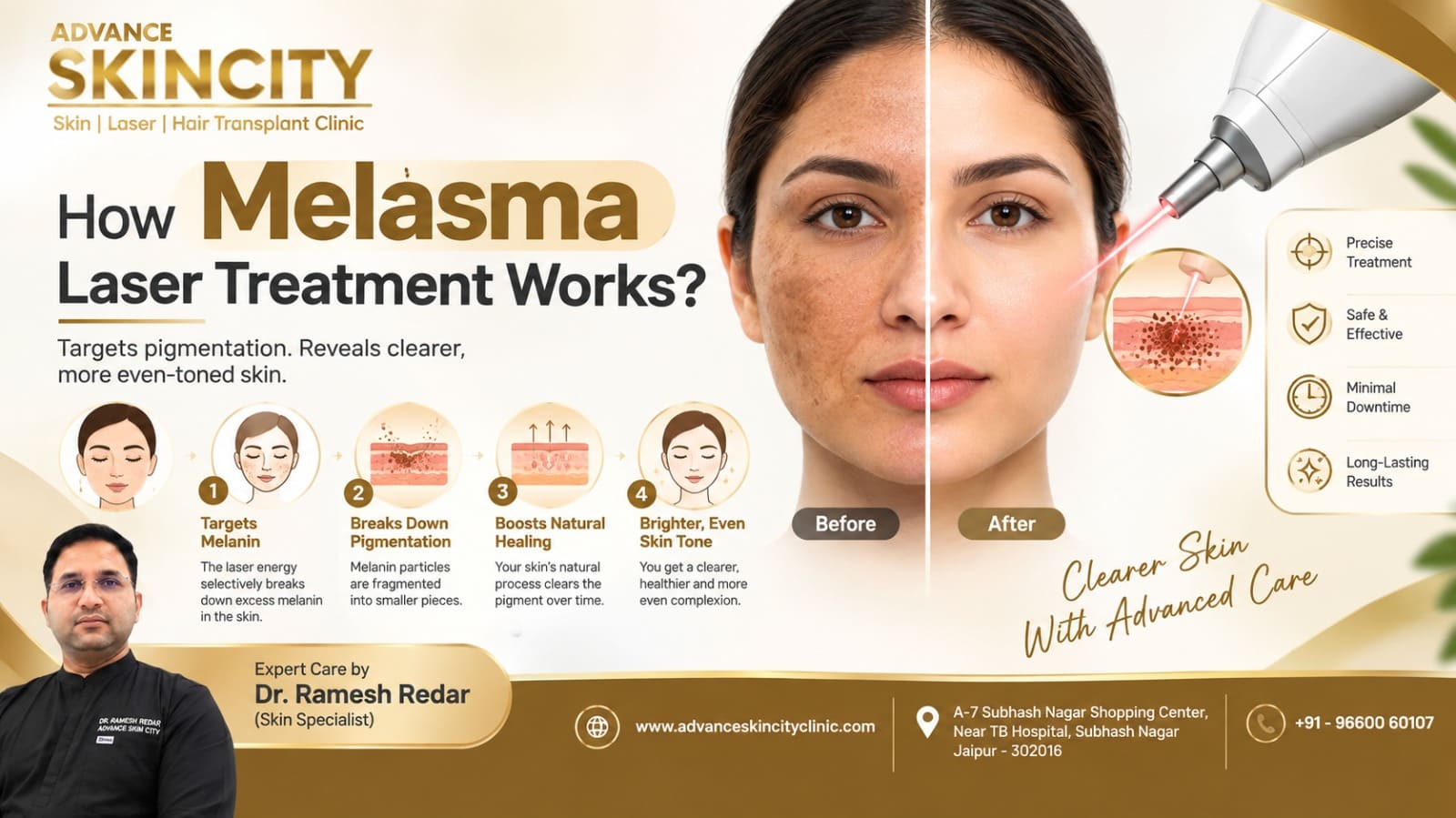
Melasma laser treatment uses targeted light energy to break down excess melanin deposits in the skin, reducing the appearance of dark patches without damaging surrounding tissue. Options like Q-Switched Nd:YAG, fractional lasers, picosecond lasers, and IPL therapy each target melasma differently, and the right choice depends on skin type, patch depth, and sensitivity. Consulting a qualified dermatologist, such as Dr. Ramesh Rebari at Advance Skincity Clinic, ensures the treatment plan matches your specific skin condition.
Melasma is one of the most stubborn pigmentation disorders a person can face. Those brown or grayish-brown patches, usually appearing on the cheeks, forehead, nose, and upper lip, don’t just fade on their own. They’re triggered by a mix of sun exposure, hormonal shifts, and genetics, which makes them notoriously resistant to over-the-counter creams and home remedies.
This is where melasma laser treatment has changed the game. Unlike topical treatments that work on the skin’s surface, lasers target melanin at a cellular level, breaking down pigment deposits with precision. The result is more consistent, longer-lasting improvement for many patients.
This guide walks through how laser for melasma actually works, the different laser technologies available, and what to expect from treatment. If you’re researching the best skin specialist in Jaipur to help you choose the right approach, this breakdown will give you a clear starting point.
How Do Lasers Help in Treating Melasma?
Melasma forms when melanocytes, the skin’s pigment-producing cells, go into overdrive and produce excess melanin. This pigment clusters in the upper and sometimes deeper layers of skin, creating the uneven, patchy discoloration associated with melasma.
Laser treatment works by delivering concentrated wavelengths of light that are selectively absorbed by melanin. This process, known as selective photothermolysis, heats and breaks down pigment particles without significantly affecting the surrounding skin. The body’s natural processes then clear away the fragmented pigment over the following days and weeks.
Different melasma laser treatment penetrate the skin at different depths and intensities, which is why no single laser works best for every melasma case. Superficial melasma generally responds well to lighter, surface-level treatments, while deeper or mixed melasma may require lasers that reach further into the dermis. Choosing the wrong type of laser can actually worsen melasma, so professional evaluation matters more here than with almost any other cosmetic skin concern.
Why Melasma Needs a Specialized Treatment Approach
Melasma is not treated the same way as freckles, sunspots, or general pigmentation issues. Because melasma is hormonally and inflammation-sensitive, aggressive laser settings can trigger rebound pigmentation, where the skin produces even more melanin in response to heat and irritation. This is why laser for melasma typically requires lower energy settings, more sessions, and a conservative, gradual approach compared to other pigmentation treatments.
A dermatologist with specific experience in melasma, such as Dr. Ramesh Rebari, will usually assess skin type, melasma depth, and triggers like sun exposure or hormonal medication before recommending a laser protocol.
What Are the Different Types of Lasers Used for Melasma?
Several laser technologies are used to treat melasma, each with distinct mechanisms, benefits, and ideal use cases.
1. Q-Switched Nd:YAG Laser
The Q-Switched Nd:YAG laser is one of the most widely used options for melasma, particularly in patients with darker skin tones. It emits short, high-energy pulses that target melanin while minimizing heat damage to surrounding tissue. This makes it a safer option for those at higher risk of post-inflammatory hyperpigmentation.
This laser is often used in a “laser toning” technique, which involves multiple low-energy sessions spaced a week or two apart. Patients typically notice gradual lightening of pigment over a series of treatments, rather than a dramatic change after a single session.
2. Fractional Lasers (like Fraxel)
Fractional lasers, including Fraxel, work by creating microscopic treatment zones across the skin rather than treating the entire surface at once. This leaves surrounding tissue intact, which speeds up healing and reduces the risk of complications.
Fraxel is especially effective for melasma combined with other concerns like fine lines, texture irregularities, or acne scarring, since it stimulates collagen production alongside pigment reduction. However, fractional lasers can carry a higher risk of triggering melasma flare-ups if not used carefully, so they are generally recommended for patients who haven’t responded well to other treatments.
3. Picosecond Lasers
Picosecond lasers deliver energy in ultra-short pulses, measured in trillionths of a second. This rapid delivery shatters melanin particles into smaller fragments, which the body can clear more efficiently than with older laser technologies.
Because picosecond lasers generate less heat than traditional nanosecond lasers, they tend to carry a lower risk of rebound pigmentation and are considered one of the more advanced options for treating melasma, especially in patients with sensitive or reactive skin.
4. Intense Pulsed Light (IPL) Therapy
Technically a light-based treatment rather than a true laser, Intense Pulsed Light (IPL) therapy uses broad-spectrum light to target pigment and redness. IPL can be effective for superficial melasma, but it requires careful calibration, since it carries a higher risk of worsening melasma in patients with darker skin tones or deeper pigment.
IPL works best as part of a broader treatment plan that includes sun protection and topical pigment-control products, rather than as a standalone solution for moderate to severe melasma.
What Should You Expect From a Melasma Laser Treatment Plan?
Most melasma laser treatment plans involve multiple sessions spaced several weeks apart, rather than a single procedure. This gradual approach reduces the risk of triggering more pigmentation while still delivering visible improvement over time.
A typical treatment plan may include:
- An initial skin assessment to determine melasma depth and triggers
- A recommended laser type based on skin tone and sensitivity
- A series of sessions, often 4 to 8, depending on severity
- Strict sun protection protocols between sessions
- Complementary topical treatments to support pigment control
Patients considering a skin clinic in Jaipur for melasma treatment should ask about the clinic’s specific experience with pigmentation disorders, not just general laser services, since melasma requires a more cautious, specialized protocol than most other skin concerns.
Choosing the Right Laser for Your Skin
There’s no universal “best” Melasma laser treatment. The right choice depends on several factors:
- Skin tone: Darker skin tones generally respond better to Q-Switched Nd:YAG or picosecond lasers, which carry a lower risk of pigment rebound.
- Melasma depth: Superficial melasma often responds to IPL or lighter laser settings, while deeper melasma may need fractional or picosecond lasers.
- Skin sensitivity: Patients with reactive or easily irritated skin typically do better with gentler, low-energy protocols.
- Treatment history: Those who haven’t responded to previous treatments may benefit from a different laser approach rather than repeating the same method.
Choose a Q-Switched Nd:YAG laser if minimizing the risk of rebound pigmentation matters more than achieving fast results. Choose a fractional laser like Fraxel if textural improvement is also a priority alongside pigment reduction.
This is precisely why an individualized consultation matters so much. At Advance Skincity Clinic, treatment plans are built around each patient’s specific skin type and melasma pattern, rather than applying a one-size-fits-all laser protocol.
Taking the Next Step Toward Clearer Skin
Melasma can feel discouraging, especially after trying creams and treatments that promise results but fail to deliver. Melasma laser treatment offers a more targeted, science-backed path forward, but success depends heavily on choosing the right laser type and working with a specialist who understands melasma’s unique behavior.
If you’re searching for the best skin doctor in Jaipur to guide you through this process, start with a professional consultation. Dr. Ramesh Rebari and the team at Advance Skincity Clinic can assess your skin, identify the underlying triggers behind your melasma, and recommend a laser treatment plan tailored to your needs.
Frequently Asked Questions About Melasma Laser Treatment
How many laser sessions are needed to treat melasma?
Most patients need between 4 and 8 sessions, spaced two to four weeks apart, depending on melasma severity and the laser type used. Gradual treatment reduces the risk of pigment rebound.
Is melasma laser treatment painful?
Most patients describe the sensation as mild discomfort, similar to a light snapping feeling, rather than significant pain. Numbing cream is often applied before treatment to improve comfort.
Can melasma come back after laser treatment?
Yes, melasma can return, particularly without consistent sun protection and ongoing skincare maintenance. Long-term management, including daily SPF use, is essential for sustaining results.
Is melasma laser treatment safe for all skin tones?
Not all lasers are suitable for every skin tone. Q-Switched Nd:YAG and picosecond lasers are generally considered safer for darker skin tones, while aggressive fractional or IPL treatments carry higher risk for those patients.
How do I choose the best skin clinic in Jaipur for melasma laser treatment?
Look for a clinic with specific experience treating melasma, not just general laser or skincare services. Ask about the laser technologies offered, the dermatologist’s experience with pigmentation disorders, and expected treatment timelines before starting.
