

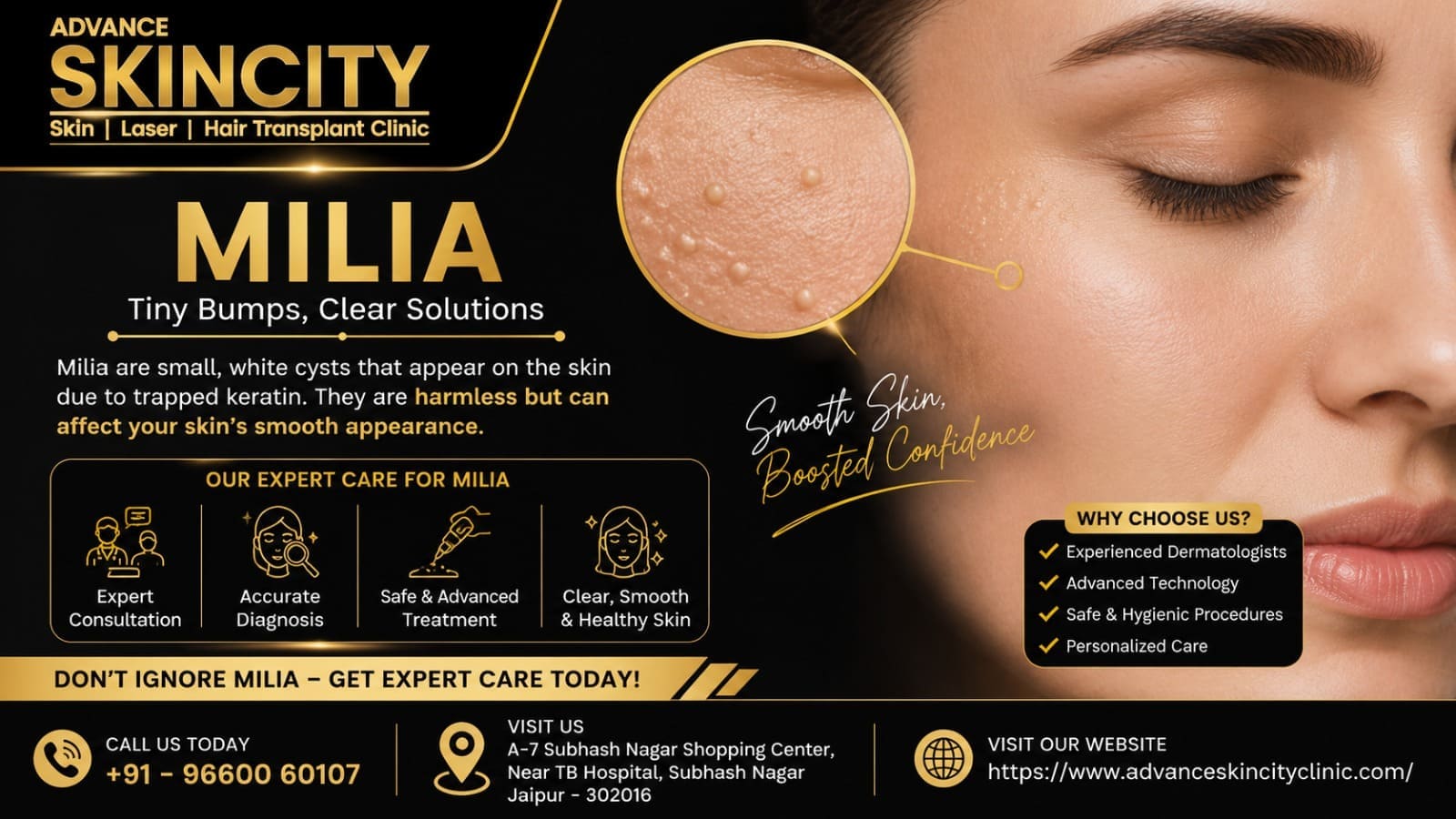
Quick answer: Milia on face occur when keratin becomes trapped just under the skin and forms bumps. These types of bumps are usually found around the eyes, nose, and cheeks due to excessive sun exposure, harsh skincare products, or skin damage. Milia are different from pimples in that you can’t pop them to expel the buildup. Treatment includes at home exfoliation, prescription creams, and in office extractions done by a dermatologist.
Have you ever noticed small, white bumps on your skin that won’t seem to go away? If you don’t see signs of noticeable acne, these bumps are probably milia. This common skin condition appears on all age groups from infants to adults.
Treating and preventing milia requires understanding the causes of milia on face. This is the only way to eliminate the bumps for good.
This guide includes information to help you answer, what are milia, why do they form, and how to effectively remove and prevent milia.
What Are Milia?
Milia are small, hard, dome shaped bumps one to two millimeters in diameter that form below the surface of the skin and are typically white or yellow in color. They appear in clusters.
Unlike pimples, there is no opening at the top of a milium. Instead of exiting the skin as planned, keratin builds up in the cells and form a cyst.
milia on face can appear near these areas on the face:
- cheeks
- nose
- undereye
- eyelids
- forehead
Approximately 40-50% of infants develop milia on face, though they can form at any age, including in adults.
What Causes Milia on Face Skin?
There are a variety of factors that can lead to milia on face. Knowing the cause can help effective treatment be determined.
Sun Damage
Seeking too much sun can lead to the skin thickening. Once this happens it becomes easier for keratin to become trapped below the skin, resulting in milia.
Skin Trauma
milia on face can form from burns, blisters, sunburns, and damaged skin. As skin heals, it can form a barrier, trapping keratin beneath the skin.
Heavy and Occlusive Skincare
Thick and heavy creams and makeup and even thick sunscreens that have a tendency to not absorb into the skin, can block pores and trap keratin.
Skin conditions
Those who have a history of rosacea, blistering or genetic conditions, may be more likely to form milia.
Genetics
There are persons who are more likely to form milia due to the way their skin is able to shed keratin.
Newborn Milia
Milia appear because a baby’s oil glands aren’t fully developed. They usually resolve on their own in a few weeks.
How to Remove Milia on Face
Because milia don’t have an opening, they cannot be popped or extracted like a normal pimple. Attempting to squeeze milia can damage surrounding skin and lead to scarring or infection. Choose best skin specialist in Jaipur if you want instant results, and use topical retinoids if you want to manage mild, persistent milia at home.
Professional Extraction
A dermatologist can manually remove milia using tools of their trade. The dermatologist will use a small opening, usually with a sterile needle, to break the seal and gently remove the trapped keratin.
Chemical Exfoliation
Acids used in chemical exfoliation dissolve the bonds that hold dead skin cells. A product containing AHA or BHA will help a controlled amount of dead skin cells surface and be naturally cleared over time.
Retinoid Creams
Prescription retinoids or retinol used topically speed up cellular turnover. This will eventually push keratin to the surface and lessen the appearance of milia.
Microdermabrasion
This is a professional skin resurfacing treatment that sucks away the outermost layer of skin. Microdermabrasion helps with the appearance of milia and skin texture overall.
Laser Treatment
For stubborn or widespread milia, dermatologists may suggest laser therapy to break the cyst wall and help the trapped keratin disperse.
How to Avoid Milia on Face
Adjusting your skincare routine and protecting your skin from damage are the best ways to make sure milia on your face do not develop. Ideally this should be done by using non-comedogenic products. Non-comedogenic products are also essential for daily sun protection, regardless of your skin type.
Use non-comedogenic products
To further reduce the risk of developing milia, use only products labeled non-comedogenic. This also applies to any and all skincare, makeup and eyeshadow.
Apply sunscreen daily
UV damage increases thickening of the skin and disrupts healthy cell turnover. This creates the trapping of keratin. Daily sunscreen usage is needed to protect the skin from everything listed above.
Exfoliate it a few times a week
Use a gentle chemical exfoliant two to three times a week to help the natural desquamation of your skin.
Don’t go overboard
Over-exfoliating can allow for the skin to become damaged and can result in a trauma response.
Living with and dealing with milia
Milia is a common occurrence for most people and is easily managed through daily skincare routines or professional attention. Newborn milia is usually temporary, but the rest require the use of retinoids or other routine exfoliants, or a trip to a Advance Skincity Clinic.
Refer a board-certified dermatologist if you have widespread or persistent milia. They can identify and address the cause and create an individualized treatment plan based on your skin type and needs.
Frequently Asked Questions
Can I treat milia at home?
milia on face cannot be treated by squeezing, as they do not have an opening on the surface. Damage to surrounding tissue, infection, and scarring can result from the squeezing. Use gentle exfoliation or seek a dermatologist for safe removal.
How long do milia last?
Newborn milia generally clear within a few weeks without treatment. However, adult milia that are left untreated can last for many months. Consistent exfoliation and the use of retinoids can help to reduce the length of time they last.
Are milia the same as whiteheads?
milia on face and whiteheads are not the same. Whiteheads have an opening that allows the pore to be open and contain oil and bacteria. Milia have no opening, and cannot be treated by the same methods as whiteheads.
Is having milia a sign of bad skincare?
Bad skincare is not the only cause of milia. Heavy, occlusive products may be a cause, but many factors like sun damage and skin injury can be the cause of adult milia.
When should I see a dermatologist for milia?
See a dermatologist if you have milia on face that last for a few months or you have milia that have spread throughout a large area of your face because safe removal can be performed by a dermatologist in a few days.
